
Networking Group Etiquette: What Works (and What Doesn’t) at Events for Business Networking
Walking into a networking event for the first time can feel a little strange. You know you’re there to meet other business owners, but what are you actually supposed to do once you arrive?
Do you need to speak to everyone? Should you take business cards? Are you expected to have a pitch prepared? And what happens if you’re not particularly comfortable talking about yourself?
Most people who are new to networking have wondered at least one of those things.
The reality is that good networking group etiquette isn’t particularly complicated. You don’t need to know a set of unwritten rules before you’re allowed through the door. It’s mostly about being aware of the other people in the room, giving them the same opportunity to speak that you’d like yourself and being willing to get involved.
At Synergy, we have people attending who have networked for years alongside people walking into their first ever business event. Being experienced doesn’t necessarily make somebody better at networking. Quite often, the people others remember are simply those who listened, showed an interest and were easy to have a conversation with.
What Does Good Networking Group Etiquette Actually Look Like?
Every networking group runs slightly differently. Some have fairly strict formats, while others are much more relaxed, so one of the first things to do is simply pay attention to how the particular meeting works.
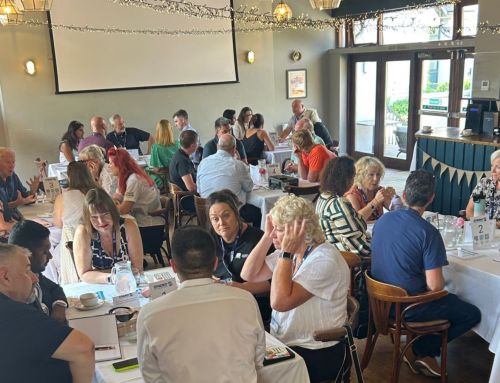
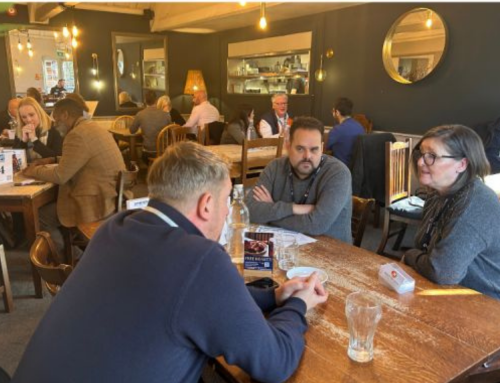
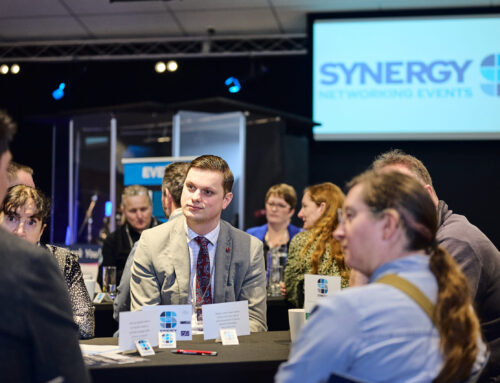
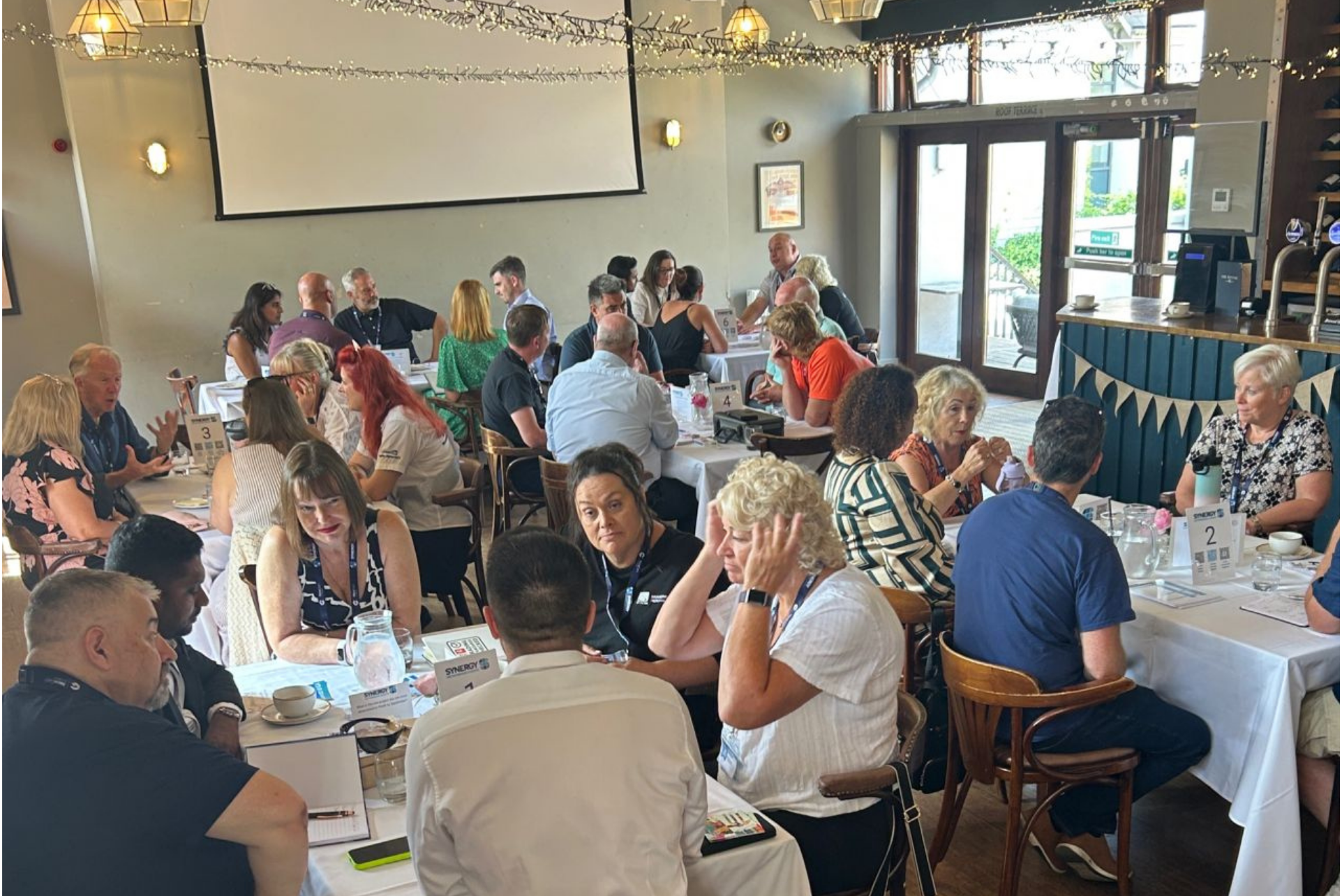
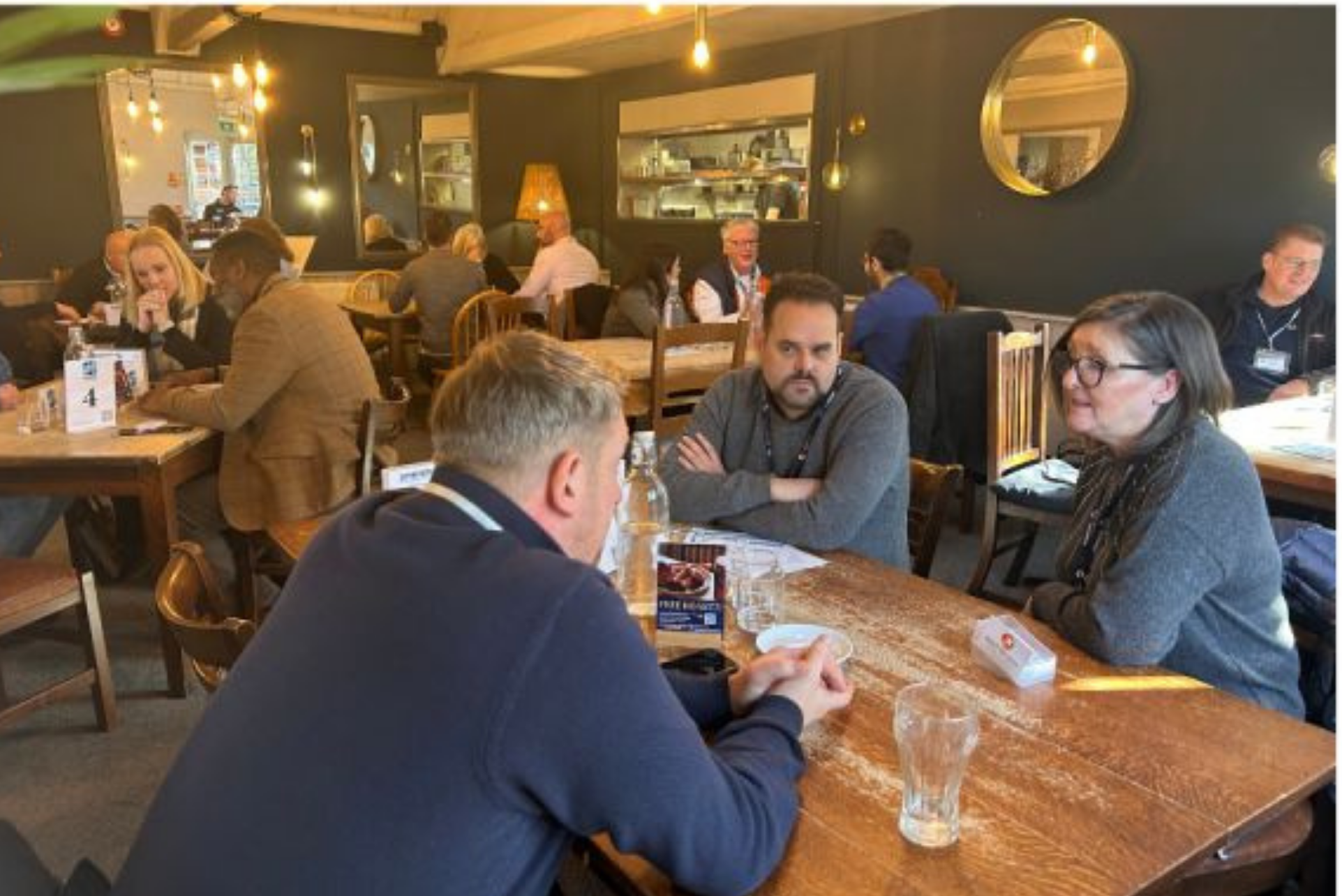
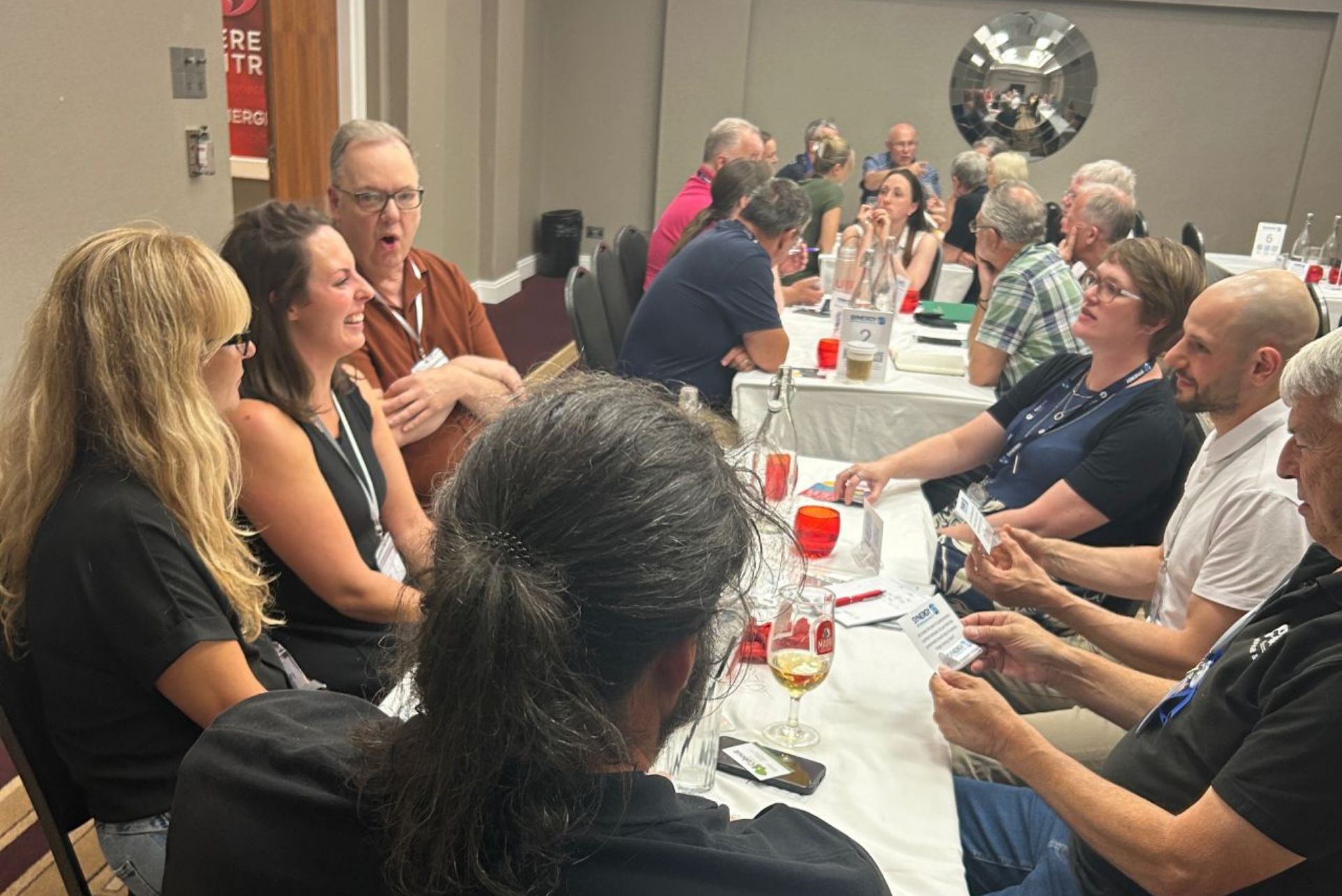
At Synergy, our events are relaxed, but there is still a structure once everyone sits down. People are usually on tables of around six, everyone gets their own time to speak and then attendees move between tables during the evening.
That only works if people respect each other’s time.
If somebody is doing their introduction, listen rather than starting a conversation across the table. If you’ve had your turn, give the next person the same attention they gave you. And if someone is new or a little nervous, give them the space to find their feet rather than jumping in to fill every silence.
Outside the structured part of the meeting, it’s even simpler. Talk to people normally.
Ask questions, listen to the answers and don’t worry too much about whether you’re “networking properly”. A good conversation between two local business owners will nearly always be more worthwhile than both people trying to perform whatever they think networking is supposed to look like.
That’s really the etiquette we want at Synergy. A room where everyone has the chance to be involved and nobody feels they need to compete for attention.
Do I Need to Prepare Before a Business Networking Event?
It’s worth doing a little preparation, but that doesn’t mean writing and rehearsing a three-minute sales pitch.
The useful bit is being able to explain what you do clearly.
That can be harder than it sounds. You spend every day working in your business, so you know exactly what you offer. Then somebody asks you to explain it to a table of people you’ve never met before and suddenly you’re either struggling for words or trying to fit your entire website into three minutes.
Neither is necessary.
Before you come along, think about what you’d want somebody to remember about your business the following day. Who do you help? What do you help them with? Is there a recent customer or project that explains it better than a list of services ever could?
At Synergy, you get around three minutes to introduce yourself at each table. For somebody who’s never done it before, three minutes can feel surprisingly long. That’s why we put question cards on the tables. They’re there to give you something to talk about if you get stuck, not because there’s a right answer you’re expected to give.
You might talk about something you’ve been working on, why you started the business, the type of introduction that would be useful to you or something people might not know about what you do.
You’ll also get another go when you move tables. Your first introduction might be a bit muddled and your second will probably be better. By the third, you’ll have naturally worked out which bits people respond to.
That’s often a better way to find your feet than trying to memorise a perfect introduction beforehand.
Arriving at a Networking Event Without Feeling Like You Have to ‘Work the Room’
For some people, giving their introduction isn’t actually the uncomfortable bit. It’s those first few minutes after walking through the door.
There are already conversations happening, you don’t know anyone and suddenly getting a coffee or looking at your phone feels very tempting.
You don’t need to immediately start introducing yourself to everyone.
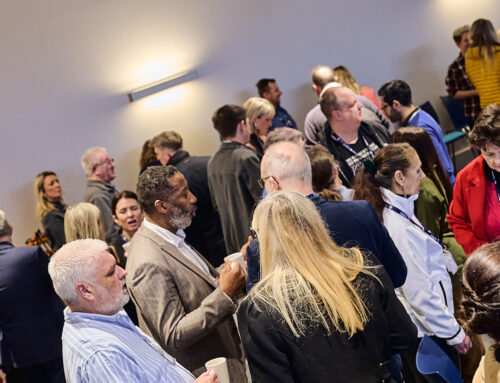
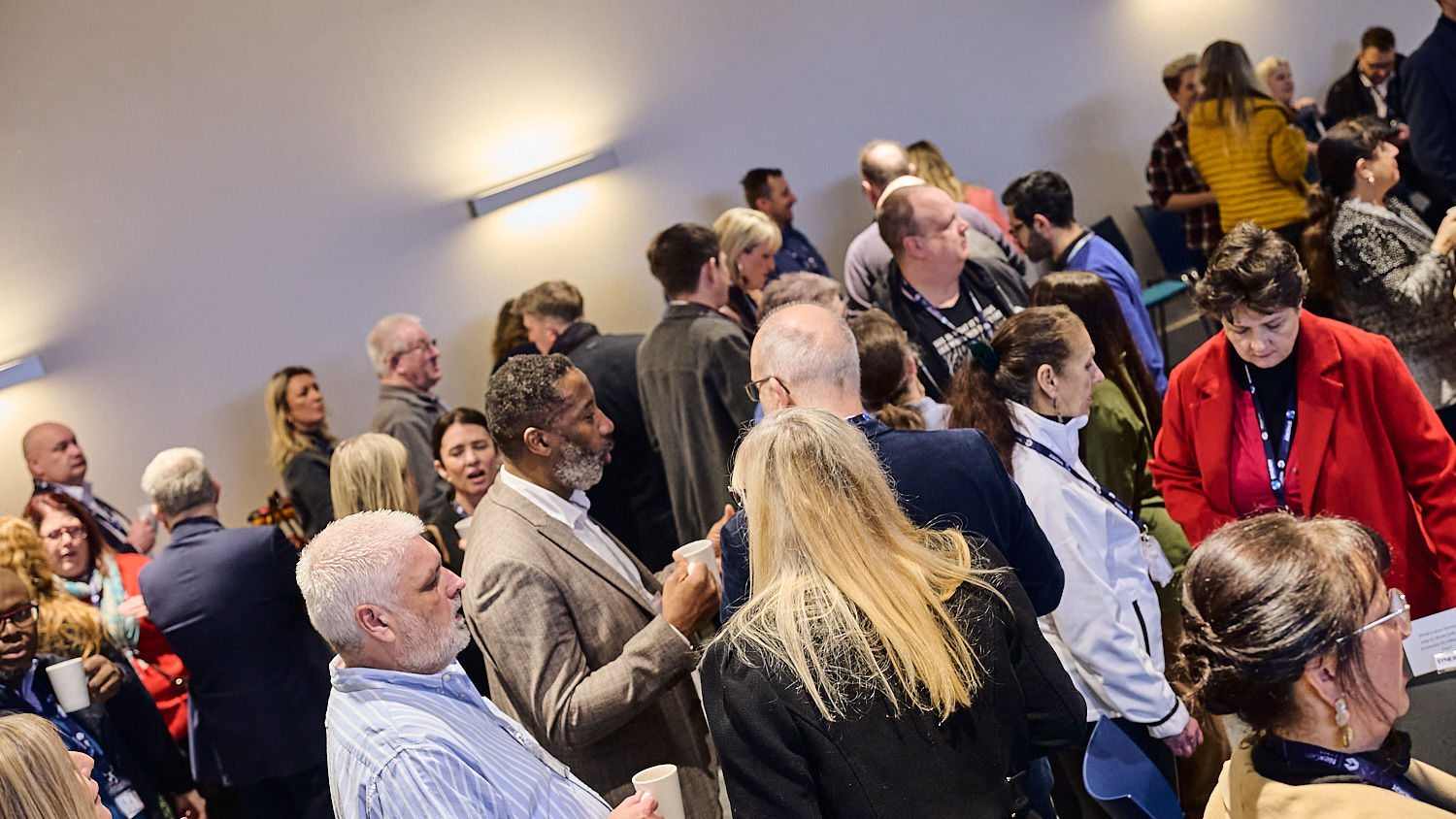
At our evening Synergy events, there’s usually around half an hour between the advertised start time and the seated networking beginning. The buffet is served, people arrive at slightly different times and conversations start naturally. That time is deliberately useful. You can get settled, grab some food and have a chat before the more structured part begins.
If you’re attending alone, start with one person. Ask whether they’ve been to Synergy before or what their business does. You don’t need an ingenious opening line.
And if you spot somebody else standing on their own, go and say hello. They may be wondering exactly the same thing you are.
Once everyone sits down, the format does a lot of the work for you anyway. You’ll be on a table with a small group, everyone gets an opportunity to introduce themselves and you’ll move tables during the evening.
So don’t put pressure on yourself to meet half the room before you’ve even found your seat. There’ll be plenty of time for that.
Do You Need to Speak to Everyone at a Networking Event?
Not at all.
Trying to speak to everyone can actually get in the way of having the conversations that make networking worthwhile. If you’re constantly looking over someone’s shoulder for the next person to meet, neither of you is getting much from the conversation you’re already having.
At Synergy, the table format takes a lot of that pressure away. You’ll usually sit with around six people and everyone gets time to introduce themselves. You’ll then move to another table and do it again, generally three times during an event depending on how many people are there.
So even if you only speak to a couple of people during the informal part of the evening, you’ll still meet plenty of businesses once everyone sits down.
It also means you don’t have to measure a good networking event by the number of contacts you’ve collected. One conversation that carries on after the table session can be far more useful than ten quick introductions you barely remember the next morning.
If you’ve met somebody interesting, stay and talk to them. There’s no rush to leave once the structured part of a Synergy event finishes, and you don’t need to cut a good conversation short just to tick another person off the list.
Listen When Other People Speak
This sounds so obvious that it almost shouldn’t need saying. In practice, it makes a big difference.
When you’re waiting for your own turn at the table, it’s easy to start running through your introduction in your head. You hear the first few words from the person speaking, then realise two minutes later that you haven’t actually taken any of it in.
Try not to.
Listening properly means you’ll understand what the other businesses in the room actually do, rather than just knowing their job title. That’s important because a useful connection isn’t always obvious from someone’s first sentence.
It also makes the conversations afterwards much easier. If somebody mentioned an interesting project or a type of customer they work with, you’ve already got something genuine to ask them about rather than starting again with, “So, what do you do?”
There’s another reason we think listening matters at Synergy.
Other people can become surprisingly good at talking about your business.
Most of us aren’t brilliant at selling ourselves. We leave things out, assume people already understand what we mean or don’t mention something because it doesn’t seem particularly remarkable to us. Someone who’s heard you speak a few times and got to know what you do can often explain your business very simply to somebody else:
“You should speak to them. They can help with that.”
That’s one of the things networking does particularly well, but only if we’re actually listening to each other in the first place.
What Doesn’t Work at Business Networking Events?
The things that put people off networking are rarely complicated. They’re usually small behaviours that make a conversation or a table feel one-sided.
Talking over somebody’s introduction is one of them. The informal part of an event is naturally lively and people will talk across each other occasionally, but once somebody has their three minutes, let them have it. Starting a side conversation while they’re speaking isn’t just distracting; it means they haven’t been given the same opportunity everyone else expects for themselves.
Taking over a conversation has a similar effect. You might be passionate about your business and have plenty to say about it, but there has to be room for the other person as well. If you’ve been talking for ten minutes and still don’t know what they do, that’s usually a sign the balance has gone a bit wrong.
And then there’s the hard sell.
Somebody asking what you do isn’t necessarily asking for a sales consultation. They’ve started a conversation. If every question becomes an opportunity to explain why they need your service, people very quickly become wary of asking another one.
It’s also worth watching the clock when it’s your turn to speak. Nobody is going to mind if you accidentally run a little over, particularly when you’re new. Regularly turning three minutes into five or six, though, takes time away from everybody else at the table.
None of this means you have to constantly worry about doing something wrong. Good networking etiquette is mostly common courtesy. Listen, leave space for other people and remember you’re sharing the room with businesses that have come along for exactly the same reason you have.
Don’t Decide Too Quickly Who Is Worth Talking To
One habit that doesn’t help at networking events is mentally sorting the room into potential customers and everyone else.
You might sit down opposite somebody whose service has absolutely nothing to do with yours. They’re probably not going to buy from you and you’re probably not going to buy from them. That doesn’t make the conversation pointless.
They may work with the same type of customers you do. They might know someone who needs exactly what you offer. Six months from now, you could be the person who has an opportunity for them.
But even that isn’t really the whole point.
When you regularly attend networking events around Kent, you gradually build a group of local business owners you know. You learn who does what, who you trust and who you’d be comfortable putting in front of one of your own customers.
That takes time. You can’t really know which connections will become useful when you’re standing in the room on the first evening.
The same applies once you’ve been networking for a while. It’s natural to arrive and head towards people you already know. We actually like seeing that at Synergy because it means genuine relationships have formed through the network.
Just make sure you’re still looking around the room.
There might be someone attending for the first time who doesn’t know anybody yet. A quick hello from a familiar face can make it much easier for them to settle in, and you might end up meeting someone you wouldn’t otherwise have spoken to.
Business Cards, LinkedIn and Following Up Without Becoming Salesy
There’s nothing wrong with swapping business cards or connecting on LinkedIn. If you’ve had a conversation and you’d like to stay in touch, that’s exactly what they’re for.
What matters is what happens next.
A connection request followed almost immediately by a generic sales message can undo a perfectly good conversation. So can taking somebody’s details from an event and adding them straight to an email marketing list they never asked to join.
You don’t need an elaborate follow-up strategy. If you spoke about something specific, mention it. If you promised to send information, send it. If you said you knew somebody they should meet, make the introduction.
Those small follow-ups show that you were actually listening.
It’s also fine not to follow up with everyone. You don’t need to leave an event with a pile of business cards and a job for the following morning. Keep in touch with the people where it makes sense and let the rest develop naturally if you meet again.
What Do You Actually Talk About at a Networking Event?
This is one of those questions people sometimes feel they should already know the answer to.
Yes, you’ll talk about business. But you don’t have to talk about business for the entire event.
Ask somebody how long they’ve been doing what they do, what they’re working on at the moment or what made them come along. You might end up talking about where you’re both based, your families, holidays, football, dogs or something completely unrelated to work.
That’s not time wasted. You’re getting to know the person behind the business.
The same applies when it’s your turn to introduce yourself. You don’t have to use every second explaining your services. This is partly why we have the question cards on the tables at Synergy. If you’ve explained what you do and still have time left, use one.
Tell people something about yourself, how you ended up running the business or something that’s happened recently.
You don’t need everyone at the table to remember every service you offer when they leave. If they remember you, understand roughly what you do and feel comfortable having another conversation with you next time, you’ve done pretty well.
You Don’t Have to Be Confident to Be Good at Networking
There’s an assumption that people who are naturally outgoing must find business networking easy. Sometimes they do, but confidence and good networking aren’t the same thing.
You don’t need to be the loudest person in the room or the one who always has something to say. Someone who listens properly, asks good questions and remembers what people have told them can make just as many useful connections.
If you’re nervous about your first event, don’t give yourself a target of meeting 20 people or finding a new customer. That’s a lot of pressure to put on one evening. Have a couple of conversations, take part in the tables and see how you get on.
The structure at Synergy helps because you’re not expected to spend the whole evening approaching strangers. Once everyone sits down, you’re in a small group and everybody gets their turn. The first three-minute introduction might feel a bit uncomfortable, but you’ll get another go when you move tables and another after that.
And if an evening networking event still feels like too much of a leap, our free netwalking events can be an easier starting point. Walking alongside somebody tends to take away some of that feeling that you need to keep a conversation going. You walk, you chat, you meet other local business owners and you get a feel for the network without the more structured introductions.
What If You Get the Etiquette Wrong?
You probably will at some point. Everyone does.
You’ll forget someone’s name just after they’ve told you. You might lose your train of thought halfway through your introduction or realise afterwards that you spent most of the informal networking talking to somebody you already knew.
None of those things are a problem.
The behaviours people actually notice are the repeated ones: constantly interrupting, not listening, taking over conversations or ignoring the format of the meeting.
There’s a big difference between being new and finding your feet, and simply not giving other people the same consideration you’d expect yourself.
So don’t walk into a networking event worrying about an invisible rulebook. Pay attention to how the meeting works, be considerate of the people around you and you’ll be fine.
After the Event, Follow Through on the Things You Said You’d Do
Good networking etiquette doesn’t stop when everyone leaves.
If you told somebody you’d send them something, try to do it. If you offered an introduction, make it while the conversation is still fresh. You don’t need a complicated follow-up system; doing what you said you’d do is enough.
The important thing is not to suddenly treat everyone you’ve met as a prospect. Meeting somebody at a networking event isn’t permission for an unexpected sales call the following morning, and it certainly isn’t permission to add them to a mailing list.
Keep the follow-up consistent with the conversation you actually had.
Then, if you enjoyed the event, come back.
This is the part of networking that’s easy to underestimate. You don’t have to make every connection in one evening. When you attend regularly, the conversations change. You recognise people, they remember what you do and you start to understand their businesses properly too.
That’s when networking becomes much more natural. You’re no longer walking into a room full of strangers and trying to introduce yourself. You’re walking into a room where you already know some people, and there are a few new ones to meet.
Good Networking Etiquette Really Comes Down to People
You don’t need to learn how to become a particular type of person to be good at business networking. You don’t need the perfect introduction, a pocket full of business cards or a plan to speak to everyone before you leave.
You do need to give people your attention and respect their time.
Some of the people you meet might eventually become customers. Others could send a referral your way, introduce you to somebody useful or become businesses you recommend yourself. Plenty will simply become people you’re pleased to see when you walk into the next event.
That’s how we want Synergy to work.
Our networking events across Kent give local business owners regular opportunities to meet, but there’s no expectation that something commercial has to happen every time you attend. Get involved, listen to the people around you and give relationships time to develop.
If you’ve been putting off business networking because you’re worried you won’t know what to say or how you’re supposed to behave, come along and see what it’s actually like.
You can join us at your nearest Synergy meeting, or try one of our free netwalking events for an even more relaxed introduction to the network.
You don’t need to know everyone in the room.
Start by getting to know one person.