

What Should You Talk About at a Business Networking Event?
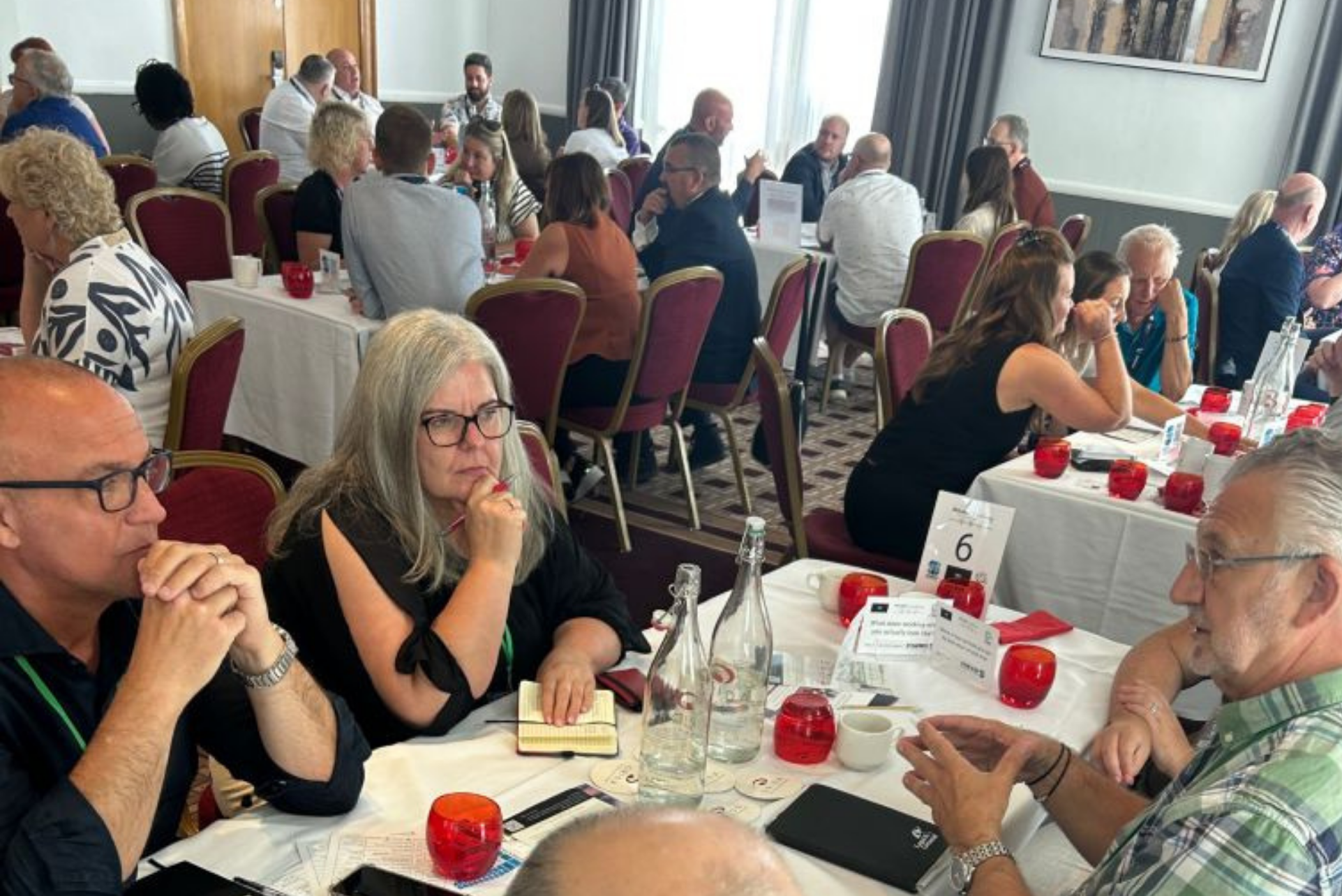
Walking into a business networking event can feel easy enough until you are actually standing in the room. You have got your drink, you have said hello to someone, and then comes the bit many people quietly worry about: what do you actually talk about?
The good news is that you do not need a clever script, a polished sales pitch or a list of questions memorised beforehand. Most good networking conversations are much more ordinary than people expect. You might talk about how someone started their business, what they are working on at the moment, where they are based or what brought them along in the first place. Just as often, the conversation might move onto holidays, children, football, local places, dogs, traffic or something else completely unrelated to work.
That is not wasted time. In many cases, it is where the connection starts.
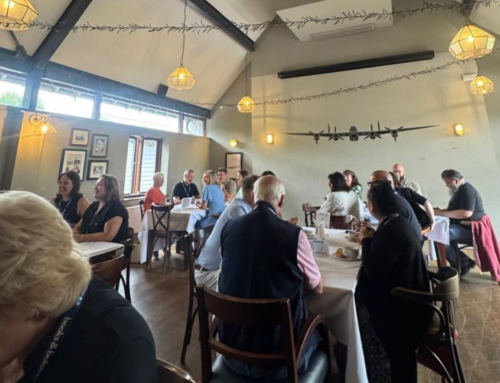
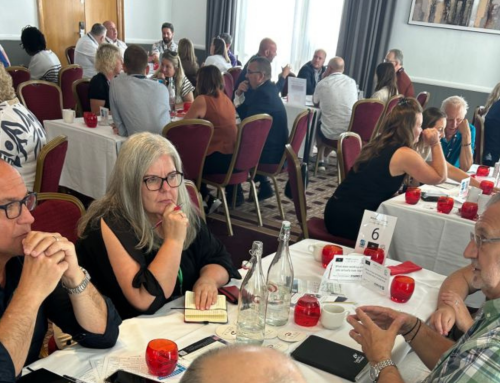
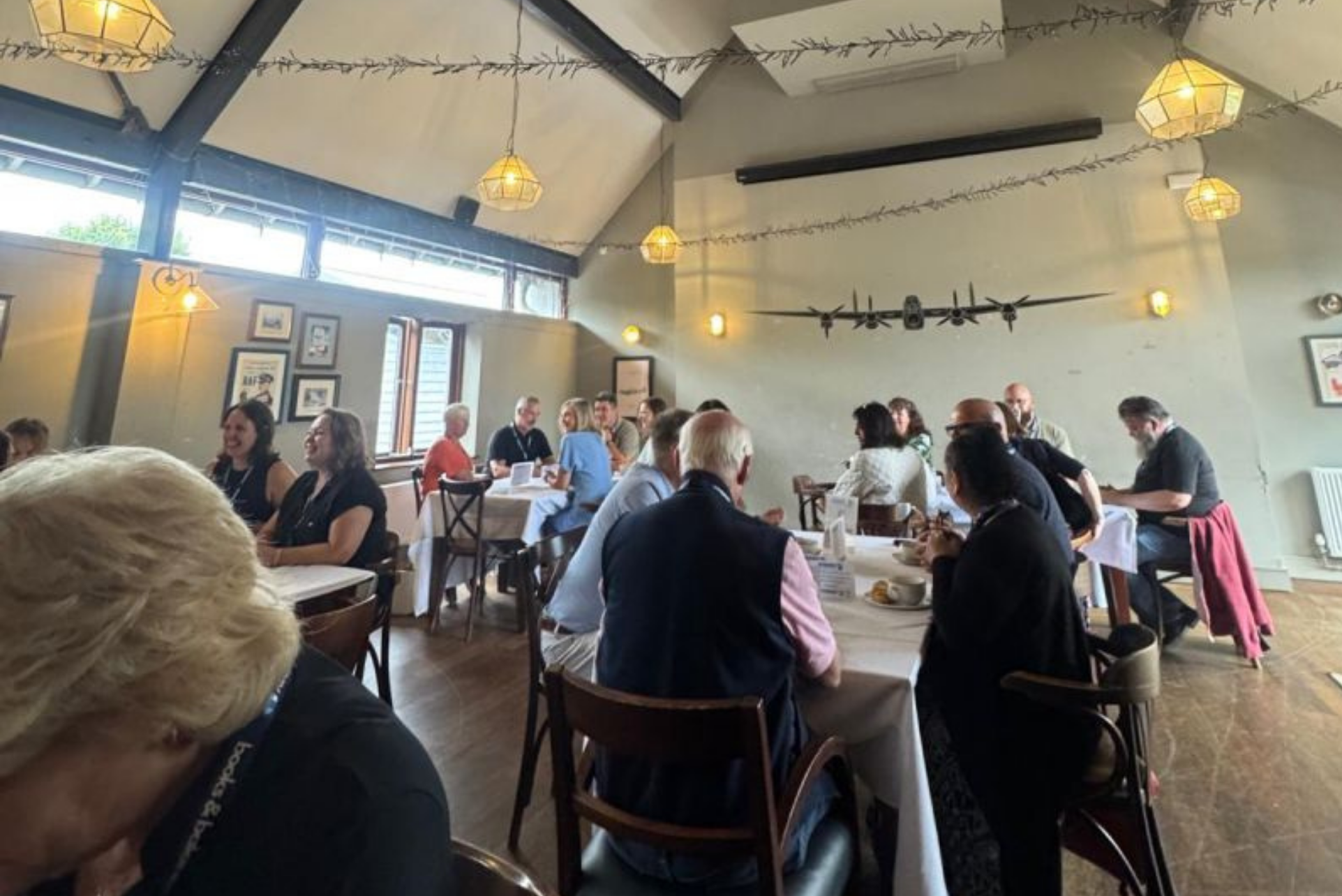
At Synergy, we see conversations begin with business, drift into something more personal and then come back around later when somebody realises they know a person, supplier or potential customer who could help. There is no need to force it. Good networking is usually less about saying the perfect thing and more about being interested in the person standing in front of you.
So, What Do People Actually Talk About at Networking Events?
There is no single topic you are supposed to stick to. Business will obviously come up, but that does not mean every conversation has to become a detailed explanation of what you do.
You might ask someone whether they have been to the group before, how they got into their line of work or what kind of customers they tend to work with. From there, the conversation usually gives you somewhere to go. If somebody says they mainly work with trades, you might discover that you both know the same local businesses. If they have recently moved into Kent, the conversation may turn to where they are based or which parts of the county they cover.
That is much closer to how networking works in real life than firing off a series of prepared questions. People also tend to remember the parts of a conversation that felt human. They may forget the exact wording of your introduction, but remember that you both know the same town, that you understood a challenge they were dealing with or that you were genuinely interested in what they had to say.
That gives you something to build on the next time you meet.
Start With Easy Questions Rather Than Trying to Impress Someone
One of the quickest ways to make networking feel awkward is to put pressure on yourself to say something impressive. You do not need a clever opening line; a simple question is usually enough.
You might ask, “Have you been to Synergy before?”, “What brought you along today?”, “How did you get into what you do?” or “Are you based locally?”
The important part is not the question itself. It is listening to the answer and giving the other person something back.
If somebody tells you they have recently started their business, ask how they are finding it. If they say most of their customers come from a certain area, ask how that came about. If they mention a challenge they are dealing with, you may be able to explore that without immediately turning it into an opportunity to sell.
This is where conversations often go wrong. People are so focused on what they want to say next that they stop listening properly, and you can normally tell when that is happening. A better conversation moves naturally because each person is responding to what the other has just said, rather than waiting for their turn to speak.
You do not need to plan the whole thing in advance.
What Should You Say When Someone Asks, “What Do You Do?”
This is probably the networking question people overthink most. When someone asks what you do, they are usually opening the conversation. They are not asking for the full story of your business.
A short, clear answer is enough. Instead of listing every service you offer, explain who you help and what you help them with.
“I help small businesses with their bookkeeping and accounts.”
“I work with homeowners planning extensions and refurbishments.”
“I help local businesses improve their websites and get found online.”
Those kinds of answers give the other person something they can respond to. If they are interested, they will ask another question and that is when you can say a little more.
Trying to fit your whole business into the first answer can make the conversation feel one-sided very quickly. You are not trying to explain everything there is to know about your company in sixty seconds. You are simply giving somebody enough to understand what you do.
And if the conversation moves onto something else, that is fine too. Not every person you meet will become a customer, but they may know someone who needs exactly what you offer. Being clear and easy to talk to is usually far more useful than delivering a rehearsed pitch. If introductions are the part you are most worried about, we have also shared some practical advice on how to introduce yourself at a networking event without giving a sales pitch.
Ask About the Person, Not Just Their Business
Networking can become repetitive if every conversation stays around job titles, services and target customers. People are much easier to remember when you learn something about them beyond what is written on their business card or LinkedIn profile.
That does not mean asking personal questions for the sake of it. It just means allowing the conversation to move if there is something worth picking up on. You might discover that you both support the same football team, have children of a similar age, know the same part of Kent or have both worked with the same organisation in the past.
Those details can make the next conversation much easier because you are not starting again with “So, what do you do?” You might ask how their holiday went, whether they won the piece of work they mentioned or how they are getting on with a new member of staff.
That is how people gradually become familiar rather than remaining another name in your contacts.
What If the Conversation Goes Quiet?
It happens to everyone. You can be having a perfectly good conversation and suddenly neither of you has an obvious next thing to say.
There is no need to panic and immediately start filling the silence. You can pick up on something they mentioned earlier or move the conversation slightly. Asking what they have coming up over the next few weeks, whether they go to many other local events or how they are finding networking can be enough to get things moving again.
Sometimes, though, the conversation has simply reached a natural end. That is not a failure either.
You can say something as simple as, “It’s been really good chatting with you. I’m going to grab another coffee and say hello to a few more people, but hopefully I’ll catch you again later.”
Everyone in the room is there to meet people, so moving on is completely normal. If the conversation was useful, connect afterwards or make a point of catching up again next time. You do not need to squeeze everything into one meeting.
Should You Talk About Your Products and Services?
Yes. You are at a business networking event, so there is nothing wrong with talking about what you sell. The key is whether the conversation has naturally got there.
If somebody asks about your service or mentions a problem you may genuinely be able to help with, explain what you do. That can be one of the most useful parts of networking.
The problem comes when every topic gets dragged back towards a sale. If someone tells you they are struggling with something and your immediate response is, “We can help with that,” it can feel rushed, especially if you have only just met.
Ask a little more first and understand what is actually happening. If there is a genuine fit, it will normally become obvious without you having to push it. You may also find that the person you are speaking to never becomes a customer, but becomes a useful supplier, collaborator or referral partner instead.
That is why it helps to keep an open mind about where a conversation might lead.
What Should You Avoid Talking About at a Networking Event?
There are not many subjects that are completely off limits. How you handle the conversation matters more than following a strict list of dos and don’ts.
Dominating the conversation is one of the most common problems. If you have spent ten minutes talking through your business and still know almost nothing about the other person, it is probably time to ask a question.
The same goes for treating the conversation like a qualification exercise. Trying to work out immediately whether somebody is likely to buy from you can make the interaction feel transactional very quickly.
It is also worth being careful with negativity. We all have difficult customers, frustrating weeks and things that go wrong, and real conversations do not have to be relentlessly positive. But a first meeting probably is not the best time for a lengthy complaint about clients, competitors or your industry.
Another easy mistake is scanning the room while somebody is talking to you. Even if you are simply seeing who else has arrived, it can look like you are waiting for someone more useful to come along. Give the person in front of you your attention. You can meet the rest of the room afterwards.
What If You’re Shy or Not Naturally Good at Small Talk?
You do not need to be outgoing to be good at networking. In fact, quieter people often do very well because they tend to listen carefully and ask good questions.
You also do not need to work your way around the entire room. Two or three worthwhile conversations can be much more useful than trying to speak to everyone.
If you are nervous before your first event, give yourself a simple aim. Introduce yourself to three people, stay for the whole meeting or speak to someone you have not met before. That feels much more manageable than putting pressure on yourself to “network well”.
At Synergy, new people are not expected to walk in and instantly know everyone. Our meetings are designed to feel relaxed, and there will usually be people who can make introductions and help you get settled.
It is also completely fine to say, “This is my first networking event, so I’m still finding my feet.” Most people will understand, and it gives them an easy way to bring you into the conversation.
If the idea of entering a networking room still feels daunting, one of our free netwalking events can be an easier first step. Walking side-by-side tends to take some of the pressure out of conversation and gives you a chance to meet local business owners in a less formal setting.
Do You Have to Talk to Everyone in the Room?
No, and trying to can actually make the event less useful because you end up rushing from one introduction to the next.
If you have three good conversations and come away understanding those businesses better, that is a productive meeting. You do not need to collect dozens of business cards or LinkedIn connections to make networking worthwhile.
Regular attendance also changes how you approach the room. You know you are likely to see people again, so there is less pressure to cover everything at once. One conversation might be brief. If you are unsure how often that should be, we have looked in more detail at how often you should attend networking events.
Relationships are easier to build when you give them time.
What Happens When You See the Same People Again?
This is often where networking becomes more useful. The first conversation normally covers the basics, but after that you can pick up where you left off.
“How did that project go?”
“Did you end up taking on the new member of staff?”
“How are things going with the new service?”
Those follow-up questions show that you remembered what somebody told you. Over time, you start to understand much more than their job title. You know who they work well with, the problems they solve and the sort of introductions that are genuinely useful.
That is when referrals tend to improve too.
Instead of thinking, “I met an accountant once,” you start thinking, “I know an accountant who works really well with growing small businesses and would be a good fit for this person.”
That is a much stronger connection.
You Don’t Have to Stay in One Synergy Room
One of the benefits of Synergy is that you can build relationships at one regular meeting without being limited to a single group.
You may have one location that feels like your usual base, where you get to know the people well and become part of that local business community. But if your business covers a wider area, you can also visit other Synergy meetings across Kent and meet a different mix of people.
That can be particularly useful if you want to build stronger connections in another town or simply broaden the range of businesses you know. You do not need to attend everything, and the aim is not to spread yourself too thinly.
The idea is to make the network work around your business. Build strong relationships where you regularly attend, then explore other meetings when it makes sense. Because the wider Synergy community is familiar, visiting another location can also feel much easier than walking into a completely new networking organisation.
The Best Networking Conversations Rarely Feel Like Networking
The conversations people remember are normally the ones that felt easy. Nobody was trying too hard to impress, nobody forced a sales pitch into the discussion and both people came away knowing a little more about each other.
That is what good networking should feel like.
You do not need to leave every event with a new customer. Sometimes the value comes from a referral, an introduction, a future collaboration or simply becoming better known among local businesses.
The more often you attend, the more comfortable it becomes. You recognise people, conversations carry on from previous meetings and walking into the room starts to feel familiar.
That is how we want Synergy to feel. Our events give Kent business owners a relaxed way to meet people, strengthen local relationships and build a network over time. You can join us at a meeting near you, visit different locations as your network grows, or start with one of our free netwalking events.
You do not need the perfect introduction. Come along, have a few good conversations and see where they lead.