
How to Introduce Yourself at a Networking Event Without Giving a Sales Pitch
You walk into a networking event, get yourself a coffee and start chatting to someone. Everything is going quite well until they ask the question you knew was coming: “So, what do you do?”
It should be an easy question. You know your own business better than anyone, but suddenly you’re wondering how much to say, whether you should mention your services and how to explain everything without sounding as though you’re trying to sell to the person standing in front of you.
We see this particularly with people who haven’t been networking for long. There’s a feeling that you need to have the perfect introduction ready and somehow make those first few seconds count, when in reality your introduction only needs to give someone enough information to understand who you are and what you do.
From there, you can have an actual conversation, and that’s usually where the useful part of networking begins.
Why does introducing yourself at a networking event feel so awkward?
A lot of the awkwardness comes from treating a networking introduction differently from any other introduction.
If somebody asked what you did while you were waiting for a coffee, you probably wouldn’t launch into a carefully rehearsed 60-second explanation of your business. You’d tell them, they’d probably ask something about it and the conversation would carry on quite naturally.
Put a name badge on, walk into a networking event and suddenly it can feel as though you’re expected to perform. Some people try to explain every service before the other person loses interest, while others have been told they need an elevator pitch and concentrate so hard on remembering it that they barely listen to the response.
There’s also the assumption that everyone else in the room knows exactly what they’re doing. After welcoming plenty of new faces to Synergy, we can safely say that’s not the case.
Even experienced business owners can feel uncomfortable walking into a room where they don’t know anyone. Some settle in immediately, while others need ten minutes and a coffee before they start feeling comfortable. Being naturally confident doesn’t determine whether networking will work for your business; being able to talk to people, listen and gradually build relationships matters much more.
What should you actually say when someone asks, “What do you do?”
The best introductions tend to be straightforward. Give someone your name, explain what your business does in plain English and add enough context for them to understand the sort of people you tend to help.
For example:
“I’m Sarah. I run a bookkeeping business in Maidstone and mainly work with small businesses that have reached the point where doing their own accounts is taking up far too much of their time.”
That gives the other person plenty to work with. They know what Sarah does, roughly who she works with and there’s an obvious problem they can relate to, which gives them several natural ways to continue the conversation.
Compare that with:
“We provide bookkeeping, payroll, VAT returns, management accounts, self-assessments and a full range of financial services for businesses throughout Kent.”
There’s nothing technically wrong with that description, but it sounds more like something written for a website than something you’d naturally say to another business owner over coffee.
The same principle works whatever your business. A web designer could say:
“I build websites, mainly for small businesses that have outgrown the site they started with and need something that better reflects where the business is now.”
A commercial cleaner might explain:
“We look after offices and workplaces around Kent. A lot of our customers come to us because they’ve grown and managing the cleaning themselves has become a bit of a headache.”
Neither person is trying to explain everything they offer. If somebody is interested, they’ll usually ask another question, and you can then talk about the part of your business that’s actually relevant rather than giving them your entire service list upfront.
If you’re struggling with your own introduction, imagine you’re explaining your business to somebody who knows absolutely nothing about your industry. If they’d understand what you do from a couple of sentences, you’re probably on the right track.
How long should your networking introduction be?
Usually, it’s much shorter than people expect. A couple of sentences will often give someone enough information to understand your business and decide what they’d like to ask next.
There is a difference between introducing yourself during a conversation and being specifically asked by an event organiser to give a 30 or 60-second introduction to the room. If you’ve been given that time, everyone is expecting you to talk about your business, so it makes sense to use it.
During an ordinary conversation, however, there’s no reason to recreate your 60-second introduction every time somebody asks what you do.
Pay attention to how the other person responds instead. If they’re interested and ask another question, tell them more. If something you’ve said takes the conversation in another direction, let it go there rather than trying to bring it back to the rest of the introduction you’d planned.
There’s no perfect number of seconds to aim for. Once somebody understands what you do and has something they can respond to, you’ve done what an introduction needs to do.
What should you avoid saying?
Most uncomfortable networking introductions aren’t caused by somebody saying completely the wrong thing. More often, they happen because the person continues talking long after everyone understands what their business does.
You mention one service, remember another that might be relevant, then another, and suddenly you’ve given somebody the contents of your services page.
Qualifications, awards and years of experience can all help establish credibility, but they don’t necessarily belong in your first couple of sentences either. If somebody asks how long you’ve been doing what you do, that’s a much more natural opportunity to talk about your experience.
It’s also worth being careful with industry language. When you work in a particular sector every day, it’s easy to forget that terminology you use without thinking can mean absolutely nothing to somebody outside your industry. If they need three acronyms explained before they can understand what your business does, there’s probably a simpler way to describe it.
One of the biggest mistakes is rushing into why the other person should use you before you’ve learnt anything about them. You don’t know whether they need your service, already have a supplier they love or are even remotely the type of customer you work with.
The same applies to business cards. There’s nothing wrong with swapping details, but it feels much more natural after you’ve had a conversation and found a reason to stay in touch than handing someone a card almost as soon as you’ve learnt their name.
What do you say after you’ve introduced yourself?
This is often the part people are really worried about. They’ve explained what they do, the other person has nodded, and now there’s a fear that the conversation is going to stop.
It doesn’t need a clever networking question to keep it going. Asking “What about you?” is perfectly fine, and once they’ve answered, listen for something you genuinely find interesting.
You might ask how they got into the business, where they’re based or what sort of customers they tend to work with. Quite often you’ll discover something in common without deliberately looking for it. Perhaps you’re both based in Maidstone, you’ve worked with similar businesses, know the same person or have dealt with the same challenge.
If you do find yourself completely stuck, questions such as “Have you been here before?” or “What sort of businesses do you normally work with?” can help, but they shouldn’t become an interview checklist. The point of asking a question is to hear the answer and let the conversation develop from there.
At Synergy meetings, it’s quite normal for a conversation that starts with business to end up somewhere completely different ten minutes later. That isn’t wasted networking time; it’s usually a sign that two people have stopped trying to network and started getting to know each other.
You don’t need to sell to the person standing in front of you
One of the most useful things to understand about networking is that the person you’re talking to might never become your customer, and the conversation can still be valuable.
Imagine you run a landscaping business and meet an accountant. The accountant doesn’t need any landscaping work, so if you’re only looking around the room for potential customers, you could easily decide there isn’t much reason to continue talking.
That accountant, however, probably speaks to dozens of business owners. Three months later, one of those clients might mention that they’re looking for somebody to improve the outside of their premises. At that point, the accountant may remember the landscaper they met and had a good conversation with.
It works the other way as well. The landscaper might later meet somebody who’s looking for an accountant and be able to make an introduction.
Thinking this way takes a lot of pressure out of networking because you’re no longer trying to decide whether every person is a sales opportunity. You’re getting to know local business owners and gradually learning who they are, what they do and who they can help. It is also why getting referrals from networking is usually more about the relationships you build than how well you sell yourself in the room.
What if you’re nervous or attending your first networking event?
For many people, walking through the door is harder than any conversation they’ll have once they’re inside.
You arrive, see groups of people already talking and assume everyone knows each other. Suddenly you’re wondering where you’re supposed to stand and whether it’s going to look strange if you walk over to people you don’t know.
If that sounds familiar, arriving slightly earlier can make things easier. Starting a conversation while people are still arriving often feels much more natural than entering once the room is already busy.
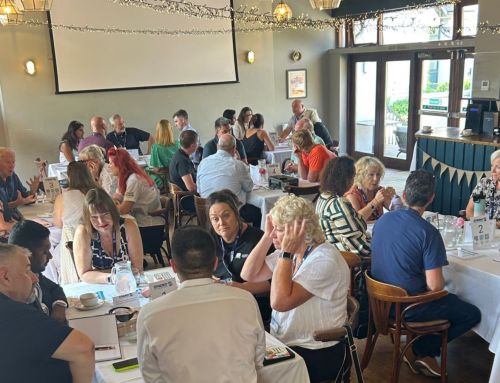
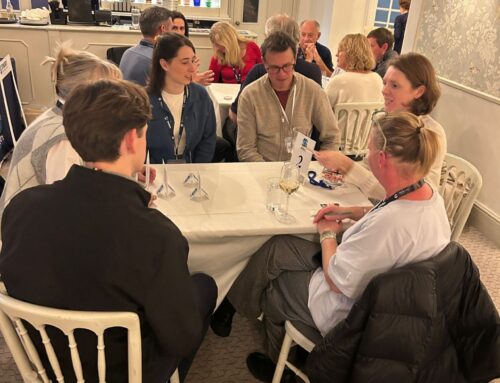
You also don’t need to know somebody before you come along. We regularly have people arrive at Synergy for the first time without knowing anyone, and we’re very aware that those first few minutes can make a big difference to how comfortable someone feels.
There’s no expectation that you need to speak to everyone either. If there are 40 people at an event and you leave having had four genuinely good conversations, that’s likely to be far more useful than trying to briefly introduce yourself to all 40.
For a first event, we’d suggest making the goal much simpler: turn up, meet a few people and see whether you enjoy it. If you are not sure what else to expect beforehand, our guide on how to prepare for a business networking event will help you feel a little more prepared.
What if you’re naturally quiet or don’t enjoy “working the room”?
You don’t need to be an extrovert to network well. Some of the best networkers we meet aren’t the people moving around the room making sure they’ve spoken to everybody; they’re often having a proper conversation with two or three people and actually remembering what they’ve been told.
If you’re more comfortable talking one-to-one, there’s no reason to force yourself to behave differently. Likewise, meeting five people properly can be far more useful than briefly introducing yourself to 25.
It can also be worth experimenting with the type of networking you attend. Our free Synergy netwalking events are a good example because you’re walking alongside other local business owners rather than standing in a room trying to decide which group to approach. People naturally change pace and move around as they walk, so different conversations start without anyone having to formally enter or leave a group.
We’ve met plenty of people who say they don’t like networking when what they really mean is that they haven’t enjoyed the particular style of networking they’ve experienced before. Finding the right environment can make a considerable difference.
Should you prepare an introduction before a networking event?
It helps to think about what you’re going to say, particularly if you know your mind tends to go blank as soon as somebody asks what you do. The important thing is to prepare the idea rather than memorising the exact words.
Think about what you’d like someone to understand after meeting you. What does your business actually do, who do you generally help and what tends to make those people come to you in the first place?
Once you have an answer, try saying it out loud. Something can look perfectly natural written down and sound surprisingly awkward when you actually hear yourself say it.
A useful test is to imagine somebody asked what you did while you were sitting in a coffee shop. If you wouldn’t genuinely give them the answer you’ve prepared, change it until it sounds more like you.
Your wording doesn’t have to be identical every time either. You might describe your business slightly differently depending on who you’re talking to or what has already come up in the conversation. That’s not getting your introduction wrong; it’s responding to the person in front of you.
What does a good networking conversation actually look like?
It’s easier to see how this works with a realistic example.
Imagine a commercial cleaner meets an accountant at an event and explains:
“I run a commercial cleaning company. We mainly look after offices around Kent, particularly businesses that have grown to the point where keeping on top of the cleaning themselves isn’t really practical anymore.”
The accountant asks where in Kent she works and they discover they both have customers in Maidstone. She asks about his business and he explains that he mainly works with owner-managed companies. The conversation moves onto what happens when small businesses start employing more people, and at some point he mentions that one of his clients has recently moved into larger premises.
The cleaner doesn’t need to immediately ask for an introduction. The accountant now knows what she does, and if that client later mentions that they’re looking for a cleaning company, there’s a good chance he’ll remember the conversation.
Equally, nothing commercial may happen at all. They could meet again at the next event, recognise each other and carry on talking.
That’s much closer to how networking works in the real world than the idea that you deliver a perfect introduction and somebody immediately gives you a referral. People gradually learn what you do and, when the right situation comes along, they know whether you’re someone worth introducing.
What happens if a conversation goes nowhere?
Not every person you meet needs to become a customer, referral partner or collaborator. Sometimes you’ll chat for five minutes, enjoy the conversation and realise it has naturally run its course.
Leaving doesn’t need to be awkward. Saying, “It was really nice meeting you. I’m going to grab another coffee and have a wander around, but hopefully I’ll catch you again later,” is completely normal at a networking event.
If there’s somebody nearby who you genuinely think they’d benefit from meeting, you can make an introduction before you move on. Just don’t feel you have to manufacture a connection for the sake of it.
Even a brief conversation can make the next meeting easier. When you see each other again, you’re no longer starting with a complete stranger.
Don’t judge a networking event by the number of leads you leave with
If you attend for two hours, talk to ten people and nobody asks for a quote, it’s easy to wonder whether the event was worth your time.
For many businesses, particularly those selling higher-value services or anything that requires a degree of trust, an immediate enquiry isn’t a particularly realistic way to judge networking.
Somebody might meet you today, see you again next month and have another conversation a few weeks later. Gradually, they understand what you do well enough to recognise when someone else in their network needs you.
Recommendations carry a degree of personal responsibility. Before somebody tells a customer, friend or business contact, “I know someone you should speak to,” they generally want some confidence in the person they’re recommending, and that doesn’t usually develop in ten minutes.
This doesn’t mean you need to fill your diary with networking events. Find meetings you enjoy and attend regularly enough for relationships to develop. Over time, becoming a familiar and trusted face within a local business community is usually more valuable than trying to collect as many contacts as possible in one morning.
Find the type of networking that suits you
There isn’t one correct way to network, and you certainly don’t need to attend every event you can find. If you are still deciding where to start, it helps to know what to look for in a networking group before committing your time to one.
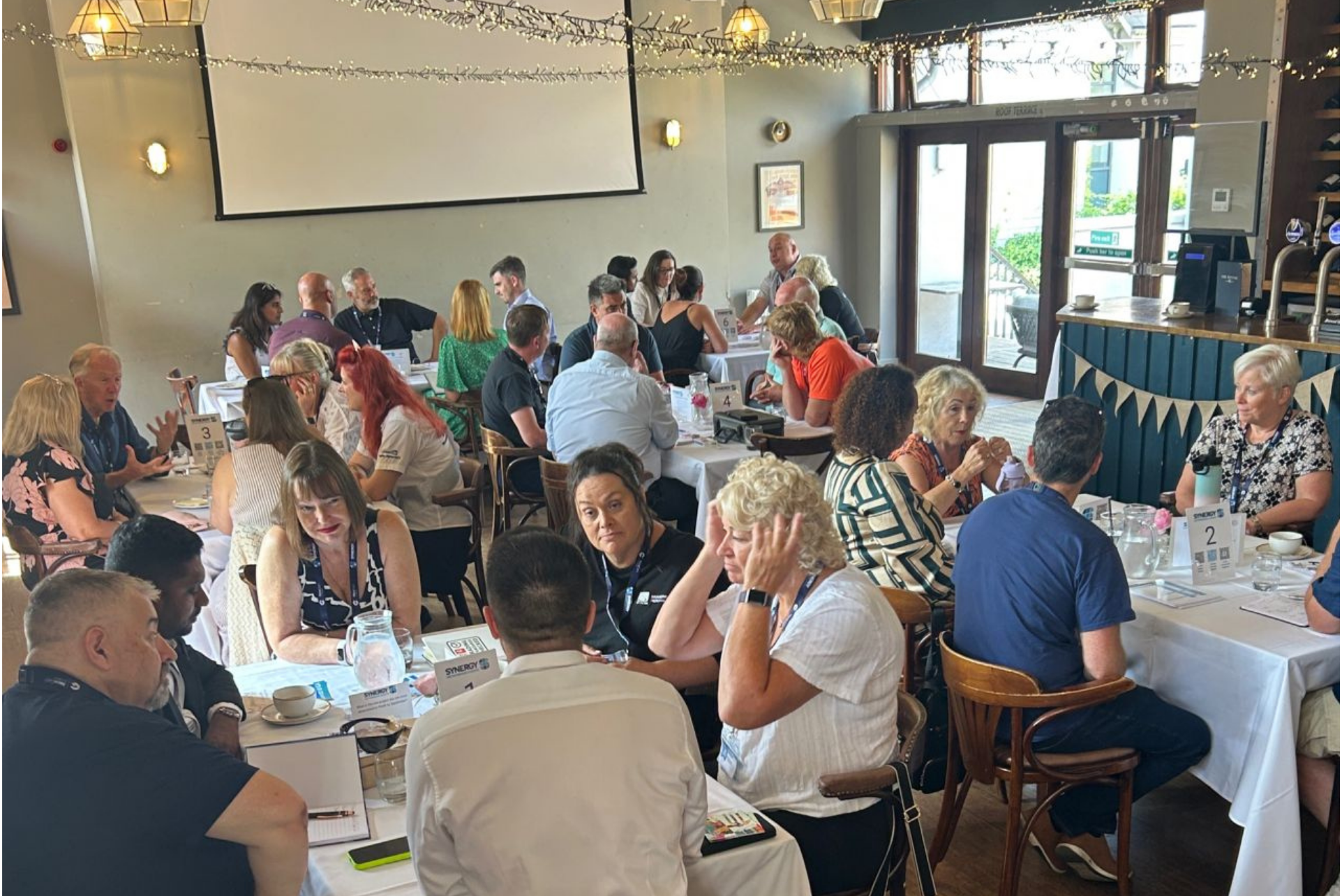
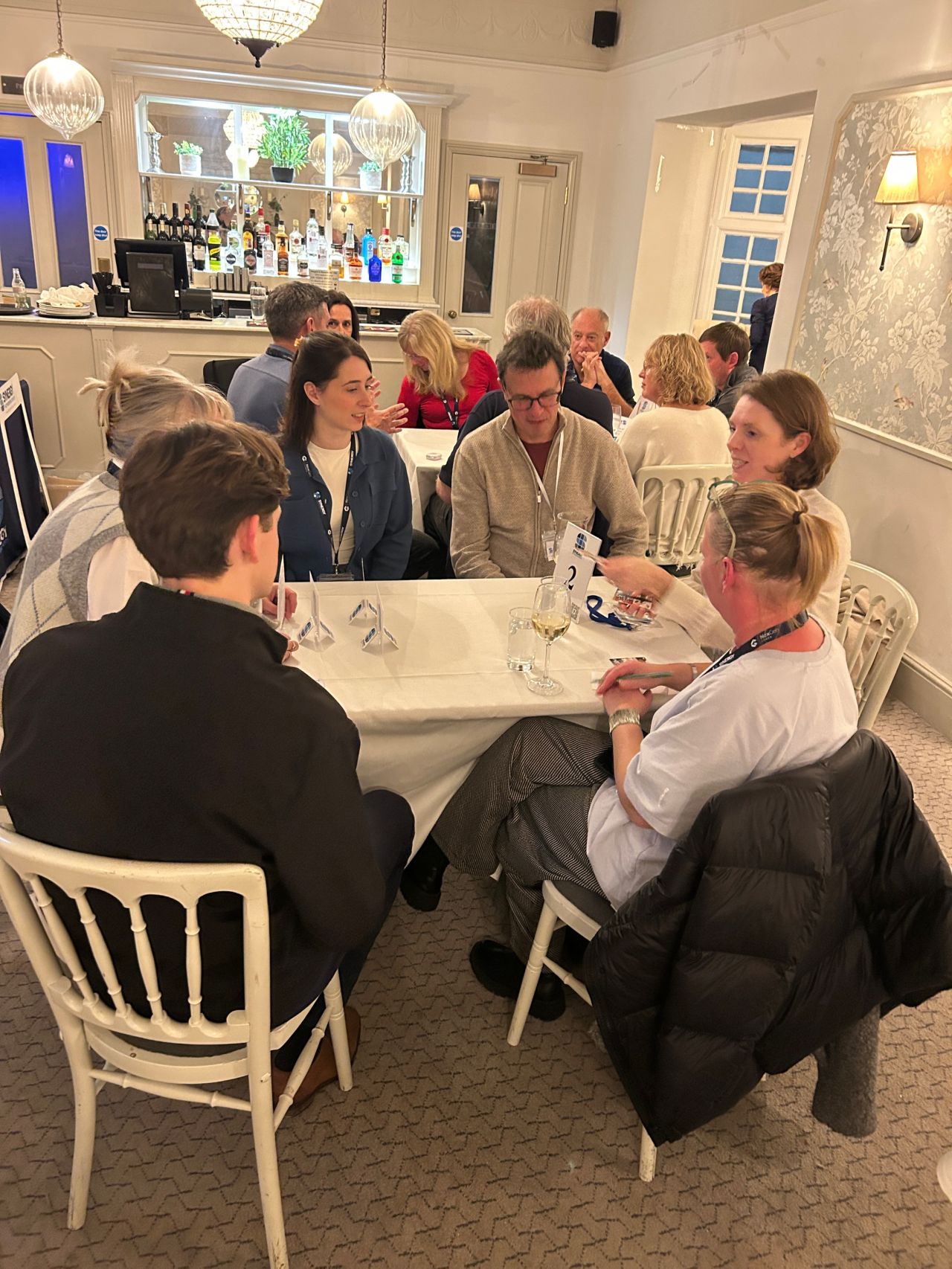
Some people enjoy a busy room with plenty going on, while others would rather talk over coffee or have a conversation while walking. Synergy has networking events across Kent, including Maidstone, Medway, Dartford, Ashford, Tunbridge Wells, Whitstable and Herne Bay, so you can find a meeting close to you or visit different locations if you want to build connections in other parts of the county.
You might find one meeting that fits nicely into your working month and become a regular there, which is absolutely fine. If your business covers a wider area, attending a few different locations can introduce you to people you wouldn’t otherwise have met.
If a traditional networking room is the thing putting you off, our free netwalking events are another way to get involved. For many people, walking and talking feels much easier than approaching groups in a venue, particularly when they’re attending for the first time.
The important thing is finding somewhere you’re comfortable enough to be yourself. You shouldn’t need to create a different, more outgoing version of yourself just because you’ve arrived at a business networking event.
Your first introduction doesn’t need to be perfect
The next time somebody at a networking event asks, “What do you do?”, don’t worry about finding the perfect answer. Explain your business in normal language, give them enough information to understand who you help and then find out a little about them.
Some of the people you meet may eventually send work your way, while others might become suppliers, collaborators or useful local contacts. Plenty will simply become familiar faces who make the next event feel a little more welcoming, and all of that is part of building a useful local network.
If you’d like to give it a try, come along to one of our Synergy networking events across Kent. Choose a meeting that works for you, or start with one of our free netwalking events if you’d prefer something particularly relaxed.
You don’t need to arrive with a sales pitch prepared. Come along, have a few conversations and see who you meet.