
How to Ask for Referrals Without Making Networking Feel Transactional
Asking for referrals sounds simple until you are actually sitting across the table from someone you have got to know through networking.
You may have had a few good conversations, they understand what your business does and you know they are well connected. Even then, asking for an introduction can feel awkward. There is often that concern in the back of your mind: will this make it sound as though I have only been talking to them because I want business?
That hesitation is understandable because a referral is different from simply swapping contact details. When somebody recommends you, they are putting a little bit of their own reputation behind the introduction.
That is why the strongest referrals rarely come from walking into a networking meeting and asking everybody who they can introduce you to.
They usually come later, once people understand what you do, know who you help and feel comfortable putting your name forward.
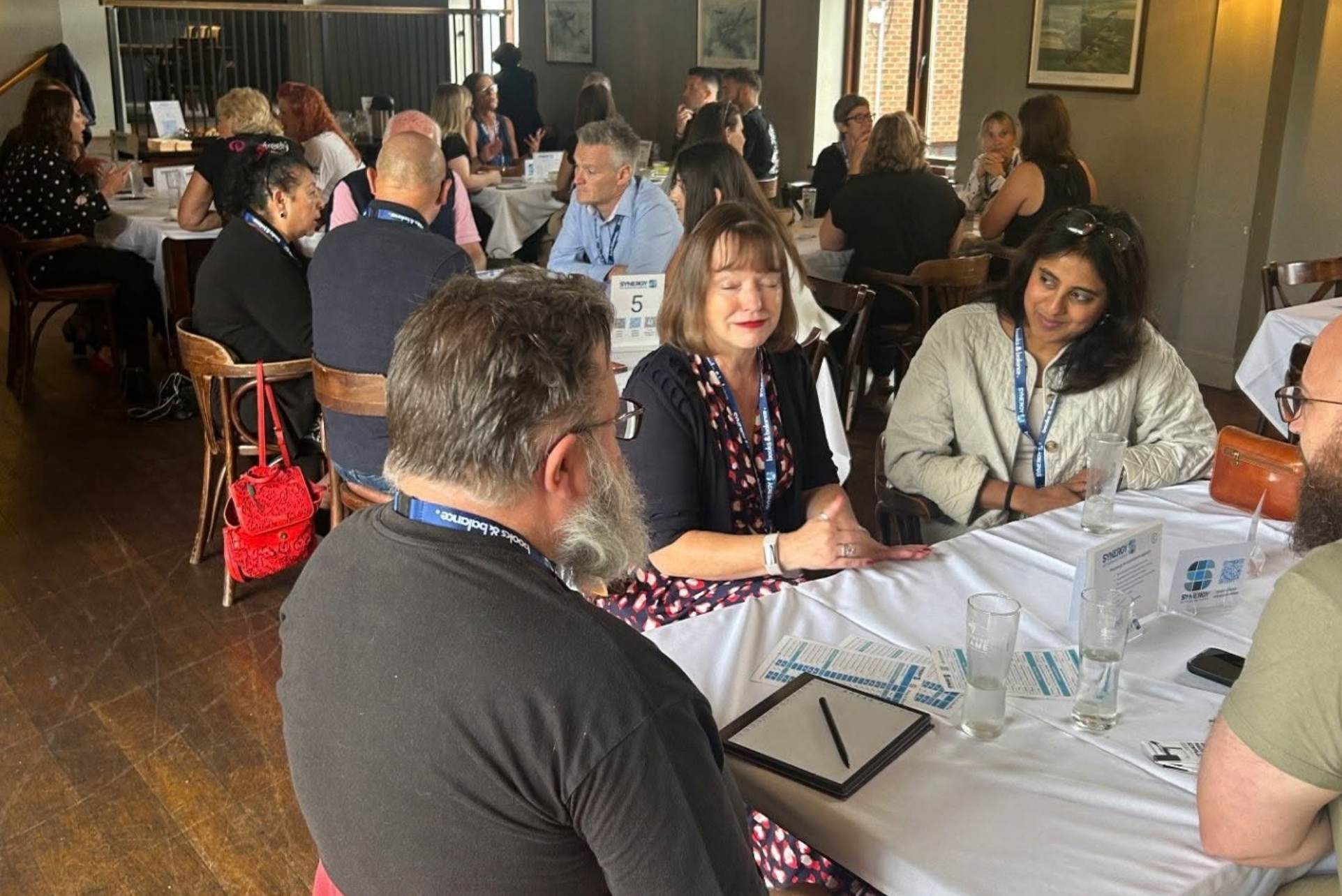
We see this regularly at Synergy. Someone might meet another member at one event, chat again a few weeks later and then have a longer conversation at another meeting or while netwalking. Those conversations gradually build a much clearer picture of each other’s businesses.
Then, when somebody says, “Actually, I know someone who is struggling with exactly that,” the introduction feels natural rather than forced.
That does not mean you should just sit back and hope referrals appear. There are times when it makes sense to ask. The difference is knowing when to do it and how to make the request feel useful rather than transactional.
Why referral requests can feel awkward
Most people do not mind helping someone they know. The awkwardness usually appears when the request comes too early or feels too broad.
If you have only just met someone and the conversation moves straight from “What do you do?” to “Who do you know that might need me?”, there has not really been enough time for either person to understand the other properly.
The same applies to vague requests.
“Do you know anyone who needs an accountant?” sounds simple, but it puts all the work on the other person. They have to think through everyone they know and decide who might be a fit.
Referral conversations are much easier when there is context.
If someone knows the type of client you work with, the problems you solve and the situations that usually lead people to contact you, they are far more likely to recognise a genuine opportunity when it comes up.
There is also a difference between being proactive and treating every conversation like a route to a lead.
Good networking should not feel like keeping score. If you refer business to another member, that does not mean they now owe you something back. Sometimes they may never become a direct source of work, but they could still become a valuable connection, collaborator or introducer.
That wider value matters.
Make sure people actually understand what you do
Before somebody can refer you confidently, they need to know more than your job title.
They need to understand who you work best with and what kind of problem you are particularly useful for.
For example, saying that you are a web designer is useful, but still broad. Saying that you usually help established local businesses whose website no longer reflects where the business is now gives someone a situation to recognise.
The same applies across most professions.
An accountant might work particularly well with growing limited companies. A photographer may specialise in personal branding. A solicitor may be especially strong in a particular area of commercial law.
That detail helps because people do not usually remember full service lists. They remember situations.
Think about the moments that normally cause someone to need your help. Are they expanding? Taking on staff? Moving premises? Rebranding? Struggling with cash flow? Planning an event?
Those triggers are often what make someone think of you later.
This is also why regular networking can help. You do not need to explain your entire business in one conversation. Different parts of what you do can come out naturally over time.
When is the right time to ask for a referral?
There is no fixed rule.
You do not need to wait for your third meeting or your fifth conversation. The right time is usually when the request makes sense in the context of the relationship.
If somebody already understands your business and mentions a person or problem that sounds relevant, that is often a good moment to ask.
For example, if someone says one of their clients is struggling to find a reliable bookkeeper and bookkeeping is your area, it is perfectly reasonable to say you would be happy to have a conversation if an introduction would help.
That feels very different from asking everyone you meet, “Do you know anyone who needs a bookkeeper?”
It is also worth considering how well the person knows the contact you want to meet. Someone may recognise the name of a business owner without having a real relationship with them.
The strongest referrals usually work because all three sides make sense: you are relevant to the opportunity, the person referring you understands what you do and they have a genuine relationship with the person being introduced.
If those pieces are not there, there is usually no need to force it.
What should you actually say?
This is often the part people overthink.
You do not need a polished script. The best referral requests are usually short, specific and easy for the other person to respond to.
If somebody has already mentioned a potential contact, you could simply say:
“If you think it would be useful, I’d be happy for you to introduce us.”
If you are asking more generally, make the request specific.
Instead of:
“Do you know anyone who needs a photographer?”
Try:
“We’re looking to work with a few more local businesses that need updated team and brand photography. If anyone comes to mind, I’d really appreciate an introduction.”
The clearer the request, the easier it is for someone to recognise a fit.
If there is one particular person or business you would like to meet, explain why you think the introduction would be relevant. Avoid making someone feel as though they are being asked to use their contacts on your behalf without a good reason.
A good referral request should leave the other person completely comfortable saying yes, no or not yet.
Referrals should work both ways, but not as a trade
Being helpful to other members is part of good networking.
If you hear that someone needs a service another member provides, make the introduction because it is useful, not because you expect a referral in return.
The moment networking becomes “I sent you one, now you owe me one”, it starts to feel transactional.
In reality, relationships are rarely that neat. You may refer one person several times before they ever have an opportunity to recommend you. Another connection may never lead directly to work but could still introduce you to someone useful later.
That is still valuable.
The strongest networks tend to work because people are willing to help when there is a genuine reason to, without treating every conversation like part of an exchange.
What if you are networking but still not getting referrals?
If you have been attending regularly and referrals are not happening, it is worth looking at how clearly people understand your business.
Could another member explain what you do to someone else?
If not, that is probably the first thing to work on.
You should also think about how you are using your time at events. If you speak to the same few people every time, your wider network is not really growing. If every conversation turns into a pitch, people may remember what you sell but not much else about you.
Follow-up matters too.
A good conversation can easily disappear once everyone gets back to work. A quick message afterwards, another chat at a future meeting or a coffee can turn a one-off introduction into an actual relationship.
There is also a timing element.
Sometimes you can be doing everything right and still not receive a referral simply because nobody has come across the right opportunity yet. That does not mean the networking is failing.
Do you need to attend every networking event?
No.
What matters more is consistency.
People are more likely to remember you and understand what you do if they see you more than once, but networking still has to fit around the rest of your business.
That is one of the advantages of having different Synergy events across Kent. You can attend the locations that suit your diary and the areas where you want to build stronger connections.
Visiting different locations can also help you meet a wider mix of business owners, but there is no point rushing around trying to attend everything.
Becoming a familiar face in a few useful places is usually more valuable than appearing everywhere once.
What should you do after someone refers you?
How you handle the introduction matters.
The person who referred you has put some trust in you, so respond promptly and treat the referred contact properly.
Do not assume the sale is already half done just because somebody introduced you.
Listen, understand what they need and be honest if you are not the right fit.
It is also good practice to thank the person who made the introduction and, where appropriate, let them know you have spoken.
You do not need to share any private details. A simple update is enough.
If people see that you handle introductions professionally, they are far more likely to recommend you again.
What if the referral does not turn into business?
Not every referral becomes a customer.
Sometimes the timing is wrong. Sometimes the budget does not fit. Sometimes both sides realise they are not right for each other.
That does not mean the referral was a failure.
A good introduction is about relevance, not certainty.
If every referral is treated like it has to become a sale, the whole process becomes uncomfortable. It is much better to have the conversation, see whether there is a fit and leave the door open if there is not.
That person may come back later or recommend you to someone else.
Can networking generate referrals without you asking?
Yes, and often those are the best ones.
Once people understand your business well enough, they start to recognise opportunities for you without being prompted.
Someone may mention they are struggling with their website, looking for an accountant or planning an event, and another member immediately thinks of you.
That is where good networking is heading.
You want people to understand your business well enough that they can spot a good fit even when you are not in the room.
That is why the smaller conversations matter just as much as the formal introductions. The detail someone remembers later may have come from a chat over coffee or during a netwalking event.
Why Synergy focuses on connections first
At Synergy, we want networking to be useful without making every conversation feel like a transaction.
Of course people come because they want to grow their business. The difference is in how those opportunities are created.
Our networking events across Kent are designed to give people the chance to have proper conversations, meet other local business owners and build familiarity over time.
There is also flexibility to attend different locations, depending on where you want to build your network.
And if traditional networking feels a little daunting, our free netwalking events can be an easier place to start. Walking and talking side by side often makes the whole experience feel more relaxed.
You can absolutely gain referrals, introductions and new business through Synergy. The strongest results usually come when people understand you first.
Start with the relationship
If asking for referrals has always felt awkward, the answer is probably not to find a cleverer script.
It is to build relationships strong enough that the conversation feels natural.
Be clear about what you do, take an interest in what other people do and give those relationships time to develop.
With Synergy events in different locations across Kent, there are plenty of opportunities to meet local business owners and become part of a wider network.
Come along, meet a few people and see where the conversations take you.